

By mid-July, most air conditioners in Westchester are running close to constantly, and the bill climbs right along with the temperature. The frustrating part is that a colder thermostat setting rarely fixes it. More often, the house is losing the cool air you already paid for, and the AC is simply working harder to keep up.
The good news is that real savings do not require a new system. A smarter thermostat schedule, balanced airflow, some shade against the afternoon sun, and a well-sealed home each lighten the load your AC carries. Together they are the difference between a system that struggles through the summer and one that keeps you comfortable while your cooling costs actually come down.
Our Top HVAC Tips
- A colder thermostat setting rarely solves high summer bills. The real issue is usually a home that cannot efficiently make and hold its conditioned air.
- Setting the thermostat extremely low does not cool your home any faster, it only runs your system longer and raises your cooling costs.
- Uneven, warm rooms are almost always an airflow or duct problem, not a sign you need a bigger air conditioner.
- Air sealing and added insulation save homeowners an average of 15 percent on heating and cooling costs.
- Ceiling fans and interior/exterior shades for your house can lower internal temperatures before your AC ever has to kick on
Why Your Cooling Costs Climb in the Summer
Homes lose cool air through home performance issues like leaky ducts, poor insulation, and gaps around windows, which force the air conditioner to run longer to hold the same temperature. Most people’s automatic response is to lower the thermostat, which only extends runtime and drives cooling costs higher. The fastest way to reduce cooling costs is rarely a colder setting; it’s finding and fixing the reasons your home cannot hold the cool air you are already paying for.
Smart Thermostat Programming That Actually Lowers Bills
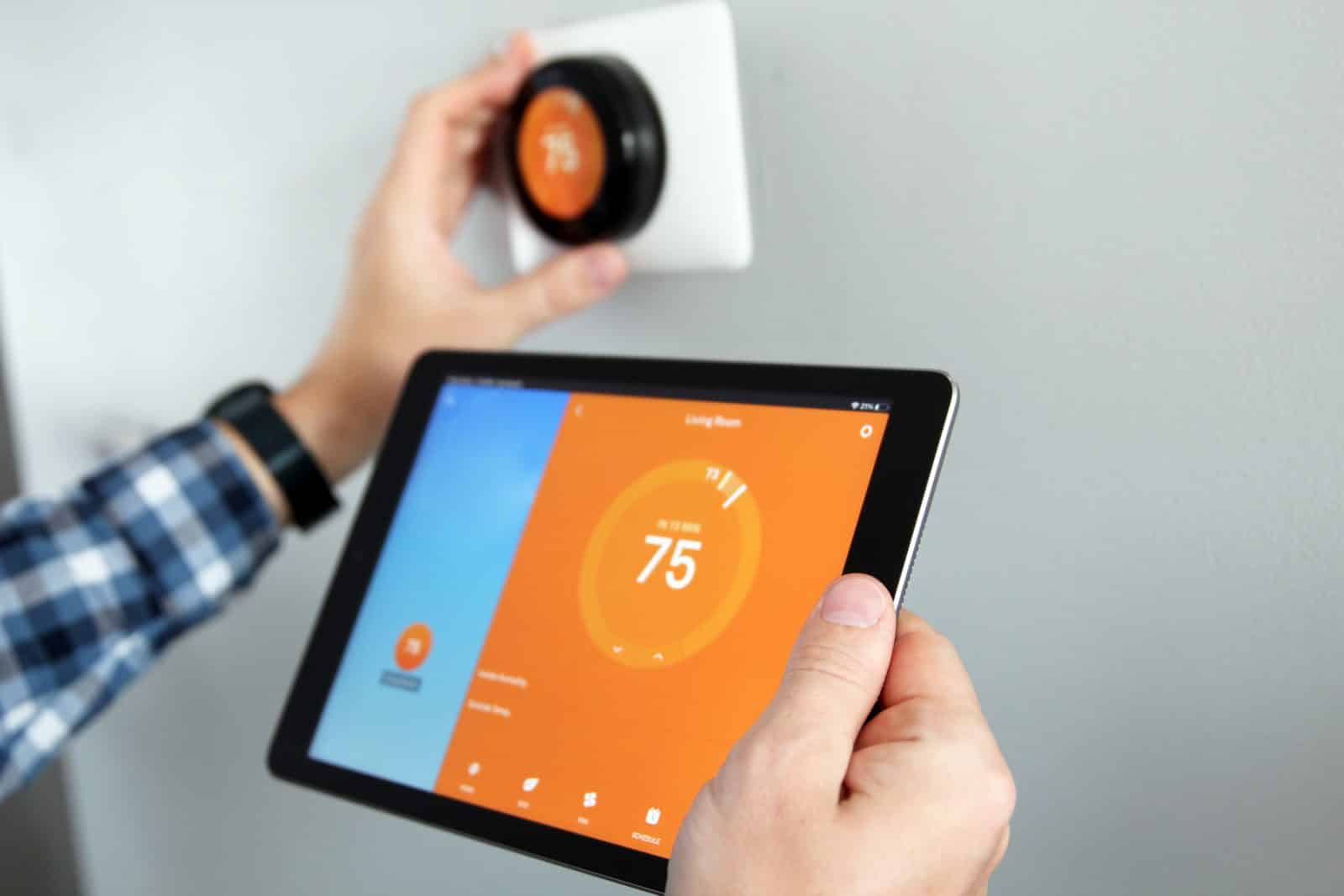
A thermostat is the most direct control you have over cooling costs, and it is also the most underused. A smart or programmable thermostat lets you match cooling to how you actually live, which can make a real difference in your summer bills.
Setback Scheduling for Summer
The largest savings come from easing off the cooling when no one is home to feel it. Rather than holding one temperature around the clock, a smart thermostat lets the house warm up while you are at work, cools it down before you return, and eases off again overnight while everyone sleeps.
Energy Star notes that smart thermostats do this automatically, learning your schedule and shifting to energy-saving temperatures when you are away or asleep. You get a comfortable home when you are in it and lower cooling usage when you are not, without having to think about it.
Why a Few Degrees Warmer Costs Less Than You Think
The Department of Energy puts the principle simply. The smaller the gap between your indoor and outdoor temperature, the less your system has to run, and the lower your bill.
Every degree you are willing to raise the thermostat on a hot afternoon translates to real savings over a Westchester summer. Ceiling fans make this easy, since the wind-chill effect they create can make a room feel around 4 degrees cooler and let you hold a higher setting in comfort. Fans cool people rather than rooms, so turn them off when you leave.
Why “Fast Cooling” is a Myth
If your home is uncomfortably hot, dropping the thermostat far below your target does not cool it any faster. The system produces cool air at the same rate regardless of the number on the display, so a lower setting only means it runs longer before shutting off. All that extra runtime does is run up the bill and wear out the equipment. Setting the thermostat to the temperature you actually want is both the most comfortable and the most efficient choice.
Balancing Airflow for Even, Efficient Cooling
Uneven cooling is often a sign of an airflow problem. Before we ever recommend new or larger equipment, we look at how air actually moves through your home, because that is where both the comfort and the savings live.
Why Some Rooms Never Cool Down
A room that never quite cools usually is not getting its share of conditioned air. There could be multiple reasons this is occurring.
- A closed or blocked supply register, or a return that furniture or rugs are covering.
- A supply run that is too long or restricted to deliver enough air.
- Ductwork that leaks cool into an unconditioned space like the attic before it reaches the room.
In older Westchester homes especially, additions and finished attics were often tied into duct systems never sized to serve them. The result is a house that cools unevenly and an air conditioner that runs long past when it should.
Filters, Registers, and Return Air
One of the simplest airflow fixes is also the most forgotten. A dirty filter chokes the air your system depends on, dramatically reducing airflow and increasing run time, wear on the blower motor, and energy use. We recommend checking one-inch filters monthly during heavy cooling months and replacing them every one to three months.
It is also worth confirming that supply registers and return grilles are open and unblocked by furniture or rugs, since a starved return strains the whole system. Your outdoor condenser needs the same clear path, so keep grass clippings, leaves, and shrubs a couple of feet clear of the unit to protect the heat exchange it relies on.
When Duct Design Is the Real Problem
Sometimes the airflow problem is built into the ducts themselves. Leaks, poor connections, and undersized runs waste a large amount of the air you pay to cool. Energy Star estimates that roughly 20 to 30 percent of the air moving through a typical duct system is lost to leaks, and that sealing and insulating ducts can improve heating and cooling efficiency by as much as 20 percent.
The ducts that lose the most run through unconditioned space, the attic, crawlspace, or garage, where leaked air simply disappears. This is where measurement matters. We test airflow and duct performance rather than guess, because the difference between a comfortable home and one that never balances is usually hiding in ductwork no one can see.
Shading and Heat Gain: Cooling the Home Before the AC Has To
Every degree of heat your home takes in from the sun is a degree your air conditioner has to remove, and your windows are the main entry point. Sun through unshaded glass, especially on the south and west sides that catch the afternoon heat, turns rooms into heat traps and keeps your system compensating well past sundown. The cheapest cooling is the heat you never let in.
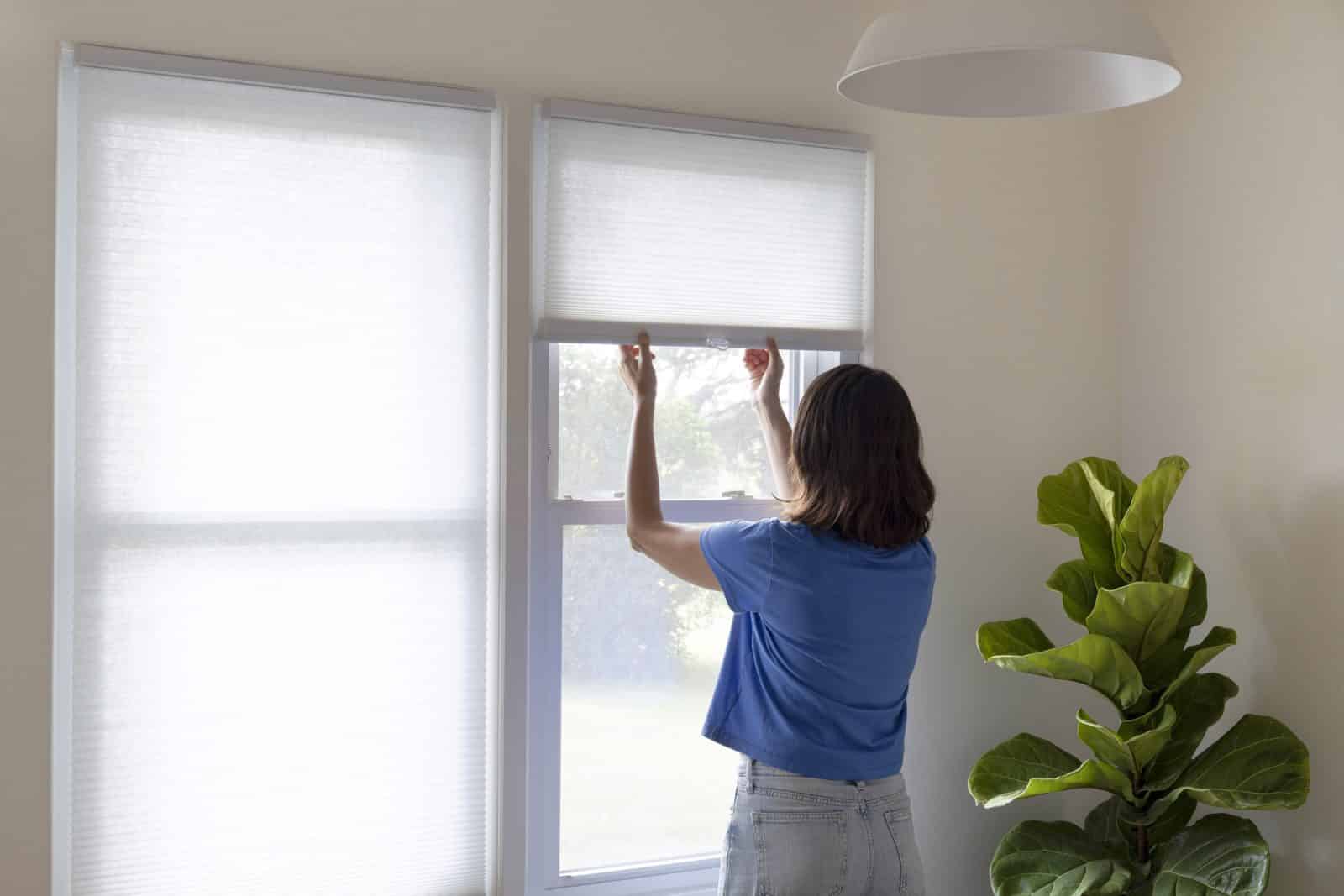
- Closing blinds, shades, and curtains during peak sun hours makes an immediate difference, especially on west-facing windows in the late afternoon.
- Exterior shade helps even more, since it stops the heat before it reaches the glass.
- Trees, awnings, and well-placed plantings reduce solar gain in a way interior treatments cannot match.
- For homeowners considering window upgrades, glazing with a low Solar Heat Gain Coefficient rejects summer heat while still letting light in, easing the load on your AC without darkening the house.
How Insulation and Air Sealing Cut Cooling Costs
A home that cannot hold its conditioned air will always cost more to cool, no matter how efficient the equipment. Insulation slows the heat pushing in through your roof and walls, while air sealing closes the gaps that let cooled air escape and hot, humid outdoor air leak in. Together they are the foundation of an efficient home.
The savings are real and measurable. Energy Star also estimates that homeowners save an average of 10 percent on heating and cooling costs by air sealing and adding insulation in attics, floors over crawl spaces, and basements.
In older Westchester homes, the attic is usually where the largest and easiest gains are found, since decades-old insulation has often settled, thinned, or was never sufficient to begin with. This is not a quick hack, but whole-home improvements change how your system performs for good. There is a reason our core philosophy is “Seal Tight and Ventilate Right.”
Home Performance and Air Quality: The Whole-Home View
A tightly sealed home holds conditioned air, but it also holds humidity, cooking byproducts, dust, and combustion gases. Seal a house without addressing ventilation and you can trade a high energy bill for a stale, unhealthy one. This is why we treat efficiency and air quality as one system rather than two separate jobs.
Why We Measure Before We Recommend
We do not guess at what a home needs. We measure it. Home performance testing shows where air is leaking, how much conditioned air the ducts are losing, and how the house behaves as a system under real conditions. Our team’s background in building science and combustion diagnostics means we read a home the way a doctor reads a chart, with instruments and data rather than assumptions.
The Link Between Efficiency and Indoor Air Quality
The same leaks that waste your cooling dollars also let in pollen, humidity, and outdoor pollutants that negatively impact air quality. Sealing and balancing a home does double duty, lowering the cooling load while giving you control over what enters the air your family breathes.
Paired with proper filtration, a well-sealed home is both cheaper to cool and cleaner to live in, which matters most for households dealing with allergies or respiratory sensitivities during a humid Westchester summer.
Cool Smarter This Summer, Not Harder
The most expensive way to cool a home is to fight its problems with a colder thermostat. A smart schedule, balanced airflow, shade against the afternoon sun, and a well-sealed envelope each lighten the load your air conditioner carries, and together they change how the whole house performs through a Westchester summer.
Comfort and lower bills are not competing goals. They are what happens when the home works with the system instead of against it.
Schedule a Home Performance Assessment
If your AC runs all day and the house still feels warm, or if some rooms never keep up while others freeze, the answer is rarely a bigger unit. It is understanding where your home is losing the cool air you are paying for. We measure, diagnose, and show you exactly what will make the difference.
Call Clover Heating & Cooling at (914) 292-4788 or contact us online to schedule your assessment before the next heat wave settles in.